Move-Out Cleaning Checklist: 7 Areas That Get Your Full Deposit Back
 By Anastasiia Serzhantova
·
·
9 min read
By Anastasiia Serzhantova
·
·
9 min read
Your lease is ending, the moving truck is booked, and now comes the part nobody looks forward to: a move-out cleaning thorough enough that your landlord actually returns your money. A good clean is the line between getting your full deposit back and opening a deduction letter three weeks later. I’ve cleaned enough Charlotte rentals to know exactly where property managers look first, and exactly where renters lose cash.
Here’s the encouraging part. Almost every cleaning charge on a move-out statement is preventable. You don’t need to repaint or replace anything. You need to hit the right spots, in the right order, with a little dwell time and a plan. This is that plan.
What do landlords actually check at move-out?
Landlords and property managers inspect the areas that show neglect fastest: inside the oven, inside the fridge, bathroom grout and caulk, baseboards, blinds, window tracks, and cabinet interiors. They compare the unit to its move-in condition, minus normal wear and tear. Baked-on oven grease and a smelly fridge are the two most common cleaning deductions.
Inspectors move fast, but they know their route. Most walk the same path every time. They open every appliance, run a finger along a baseboard, check corners at floor level, and look up at vents and ceiling corners for cobwebs. Then they use their nose. A room that looks fine but smells like old grease or pet odor still reads as “not cleaned.”
The spots that trigger charges the most often:
- Inside the oven and the stovetop drip pans
- Inside the refrigerator, including drawers and door gaskets
- Bathroom grout, shower caulk, and anything with mildew
- Baseboards, blinds, and window tracks packed with dust
- Cabinet and drawer interiors, especially in the kitchen
- Sticky switch plates, door handles, and light fixtures
How long does your landlord have to return your deposit in North Carolina?
In North Carolina, your landlord must return your deposit or mail you an itemized list of deductions within 30 days after you hand over the keys, under state law (G.S. 42-52). If the repair costs can’t be figured out in time, they must send an interim accounting at 30 days and a final one within 60 days.
Two rules protect you here, and both matter for cleaning. First, a landlord can only deduct for permitted reasons (G.S. 42-51) like actual damage or unpaid rent, and the deduction can’t be larger than the real cost. Second, they can’t charge you for normal wear and tear. Faded paint and a worn carpet path are wear. Grease, grime, stains, and a filthy oven are not, so those are fair game for a deduction.
The practical takeaway: if you leave the place genuinely clean and take dated photos, a vague “cleaning fee” is hard for a landlord to justify. Deductions have to be itemized and real.
Why the home must be empty with the utilities on
Two things quietly decide how well a move-out clean goes, and renters get both wrong all the time.
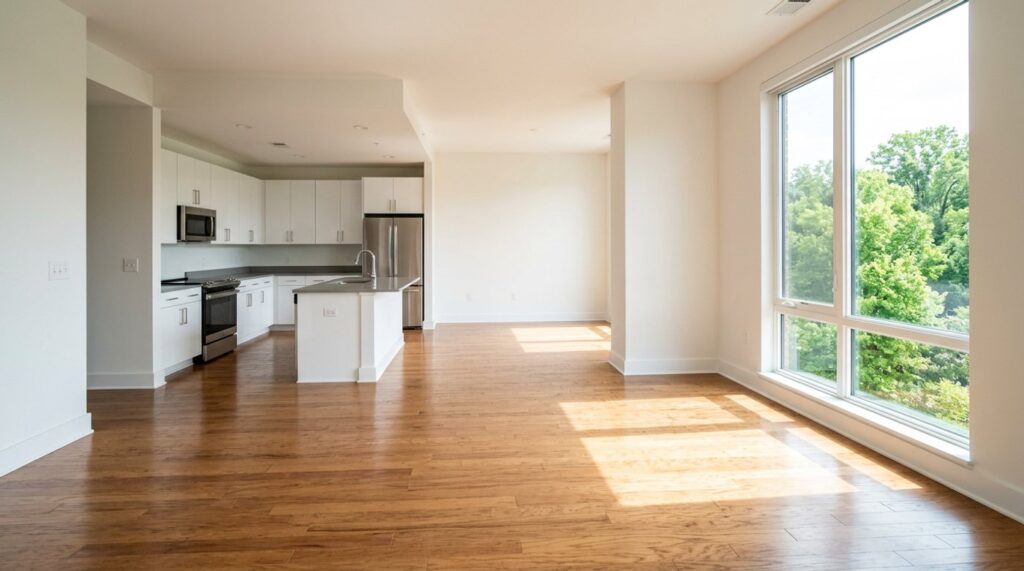
The home has to be empty first. A cleaner is paid to clean, not to move your boxes or work around a couch. Every item still in the unit is a surface that can’t be reached and a spot that gets skipped. Clean after the furniture is out, not before. If you’re hiring a move-out cleaning service, book it for the day after the truck leaves.
Leave the water and power on. You cannot mop floors, rinse a tub, or run a vacuum in a dark unit with no water. Set your utilities to shut off the day after your keys are due, not before. Your landlord also needs the lights and water on for the final walkthrough, and an empty home with working utilities is what a clean is measured against.
Inspectors don’t grade the middle of the floor. They open the oven, drag a finger down the baseboard, and check the corners you can’t see standing up.
Your room-by-room move-out cleaning checklist
Work top to bottom and back to front in every room, so dust and crumbs fall onto floors you haven’t done yet. Save the floors for last. Here’s the room-by-room breakdown that matches what gets inspected.
| Room | Move-out must-dos |
|---|---|
| Kitchen | Inside oven and racks, stovetop and drip pans, inside and on top of the fridge, microwave inside and out, cabinet and drawer interiors, sink and faucet, floor edges |
| Bathrooms | Grout and shower caulk, tub and glass, toilet base and behind it, mirror, exhaust fan cover, under-sink cabinet, floor |
| Bedrooms and living areas | Baseboards, blinds and window tracks, closet shelves and rods, light fixtures and ceiling fans, spot-clean walls, vacuum and mop |
| Whole home | Doors and handles, switch plates and outlets, air vents, cobwebs in corners, patch small nail holes, remove every bag of trash |
The spots renters always forget
These five areas cost people their deposits more than anything else. They’re also the ones you can win with a little patience instead of muscle.
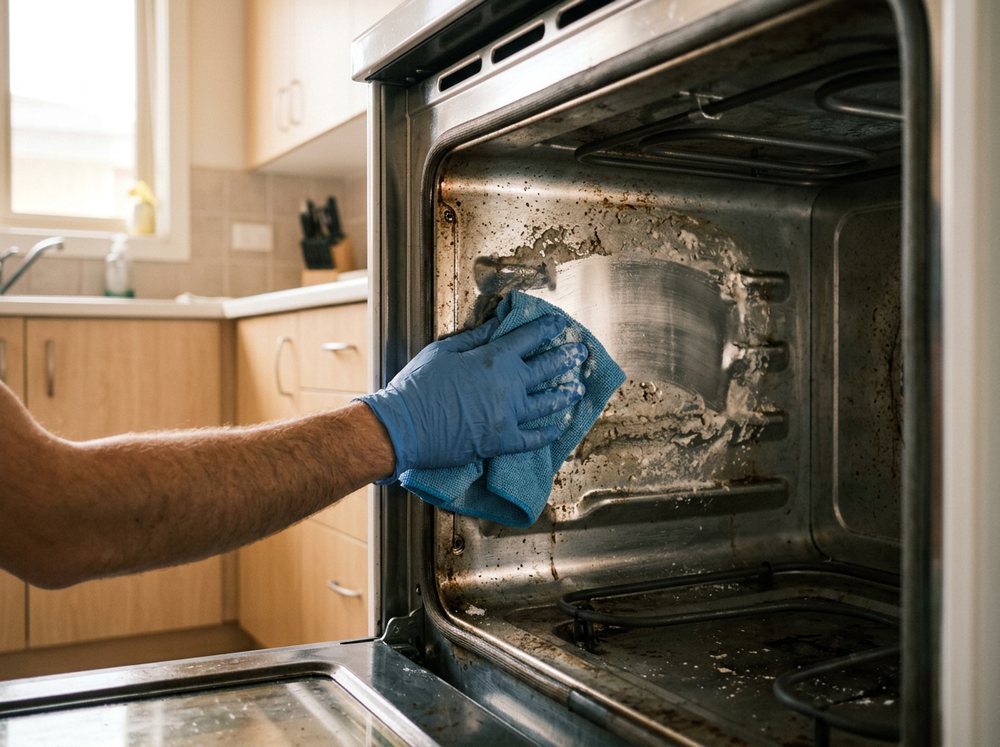
Inside the oven
Grease bakes onto oven walls over months, so give it time to break down rather than scrubbing blind.
- Pull out the racks and soak them in hot, soapy water in the tub or sink.
- Mix baking soda with a few tablespoons of water into a spreadable paste. Coat the inside of the oven and the door, avoiding the heating elements.
- Let it sit. A few hours helps; overnight (around 12 hours) is what really lifts baked-on grime.
- Wipe it out with a damp cloth and scrape stubborn spots with a plastic spatula.
- Spritz any leftover residue with white vinegar. It foams against the baking soda, then wipes to clean metal.
A store-bought oven cleaner is faster if you’re short on time: spray it on, let it sit about 20 minutes, then wipe. Open a window and wear gloves either way. If the oven is the one job you’d rather skip, our inside-oven add-on exists for exactly that.
Inside the empty fridge
An empty fridge with the door shut and the power off turns sour within a day. Handle it last, right before you leave.
- Empty it completely and pull out the shelves and drawers.
- Let glass shelves warm to room temperature before you wash them, so hot water doesn’t crack the cold glass.
- Mix one to two tablespoons of baking soda per quart of warm water. Wipe the walls, door gaskets, and bins, then rinse and dry.
- If the power is getting shut off, prop the door open so mildew can’t grow inside.
Leaving a fresh box of baking soda inside is a nice touch that inspectors notice. The same care applies to the inside-fridge add-on I run on move-outs.
Baseboards, blinds, and cabinet interiors
Dust collects on baseboards and blinds for months and it’s the first thing a finger finds. Wipe baseboards with a damp microfiber cloth. For blinds, close them one way and wipe across, then flip and repeat. Open every cabinet and drawer and wipe out crumbs and sticky rings, because inspectors do open them.
A Charlotte move-out I won’t forget
Last spring a renter in NoDa called us two days before her walkthrough. She’d already wiped down the counters and vacuumed, so the place looked decent at a glance. But the oven held a winter’s worth of baked-on grease, and the fridge had sat off for a day with the door closed. That sour smell hit us at the door.
I spread oven paste first and let it work while I moved through the rest of the unit: baseboards, blinds, grout, cabinet interiors. About two hours later we came back to the oven and wiped it down to bare metal. Then we hit the fridge with baking soda solution, dried it, and left a fresh box inside with the door propped. Her property manager returned the full deposit. The oven and the smell were the only things standing between her and her money, and both were fixable in an afternoon.
How much time should you leave before the final walkthrough?
Give yourself more runway than you think. A full move-out clean on an empty one-bedroom runs roughly three to five hours if you’re doing it alone; a professional moves faster. Start the oven paste the night before so it can dwell overnight. Clean once the unit is empty, and schedule any professional clean at least a day before your walkthrough, not the same hour, so there’s room to touch up anything you missed.
A simple sequence that works:
- Night before: coat the oven, soak the racks.
- Cleaning day: kitchen and bathrooms first, then bedrooms and living areas, floors last, fridge right at the end.
- Before you leave: take dated photos of every room and every appliance interior.
Frequently asked questions
Do I really have to clean inside the oven and fridge?
Yes. Those two are the most-flagged items on move-out inspections. A greasy oven and a smelly fridge are treated as dirt you left behind, not wear and tear, so a landlord can deduct the cost of cleaning them. Both are the areas renters most often skip.
What counts as normal wear and tear versus damage?
Wear and tear is the ordinary aging a landlord expects: faded paint, small nail holes, worn carpet paths, loose door handles. Damage and dirt are on you: grease, stains, mildew, crayon on walls, and grime that a normal clean removes. You can only be charged for the second group.
Can my landlord charge a flat cleaning fee?
In North Carolina, deductions must reflect actual costs and can’t exceed them, and they have to be itemized in writing. A blanket cleaning fee charged against a unit you left genuinely clean is challengeable, especially if you have dated move-out photos to back you up.
How long does it take to get my deposit back in North Carolina?
Your landlord has 30 days after you return the keys to send your deposit or an itemized list of deductions. If repair costs can’t be determined yet, they send an interim accounting at 30 days and a final one within 60 days.
Should I clean it myself or hire a move-out cleaning service?
If you have a free day, the right supplies, and the energy after a move, doing it yourself can save money. If your schedule is tight or the unit is large, a move-out cleaner usually costs less than the deposit you’d risk losing, and it comes with the appliance work most people dread.
Do the utilities really need to stay on?
Yes. You need water and power to mop, rinse, and vacuum, and your landlord needs them on for the walkthrough. Set the shut-off for the day after your keys are due so you’re never cleaning in a dark, dry unit.
If your move-out list is longer than your moving week, my move-in/move-out service can take the cleaning off your plate entirely. Want a number first? Get a fast price with our online quote calculator.
Anastasiia Serzhantova is the founder of Close 2 Clean and the person who actually cleans your home — every visit, start to finish. She works solo across the Charlotte metro, from Uptown condos to family homes in Ballantyne, and writes about the practical, tested methods she uses every day: the ones that hold up in real Charlotte homes.